Europe Barcelona
Where to stay in Barcelona
The old town, the grid, a former village and a beach district: how the Gothic Quarter, El Born, Eixample, Gràcia and Poblenou compare for crowds, sleep and getting around.
- First time here
- The Eixample near Passeig de Gràcia: central, well served by several metro lines, quieter at night than the old town, and an easy walk to the Gothic Quarter.
- From the airport
- Airport bus or L9 Sud metro
- Best months
- May, June, September and October
- Getting there
- Fly into Barcelona, or high-speed train
- Pack
- A zipped bag and light layers for evening
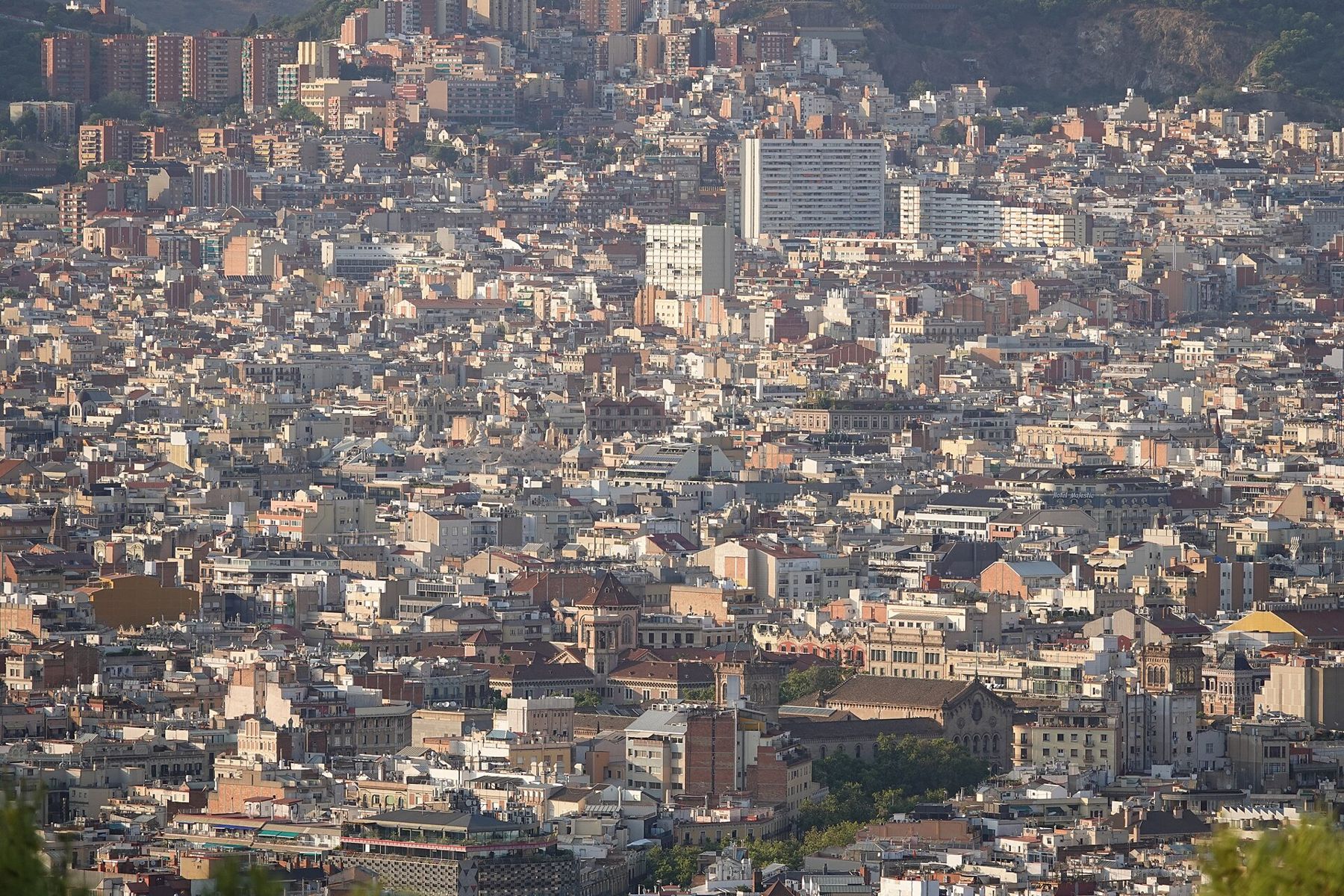
Barcelona is easy to read once you see its shape. The medieval old town sits by the port, the nineteenth-century grid of the Eixample spreads inland from it, and former villages such as Gràcia were swallowed as the grid grew. The beach runs north-east along the sea, and the hill of Montjuïc rises to the south-west. Almost everything a first-time visitor wants lies within that frame, and the metro ties it together well.
The real choice is about mood and sleep: medieval lanes with crowds and late noise, wide grid streets with traffic but more space, or a neighbourhood that feels like a small town. Here is how five quarters compare.
The Gothic Quarter: the old core
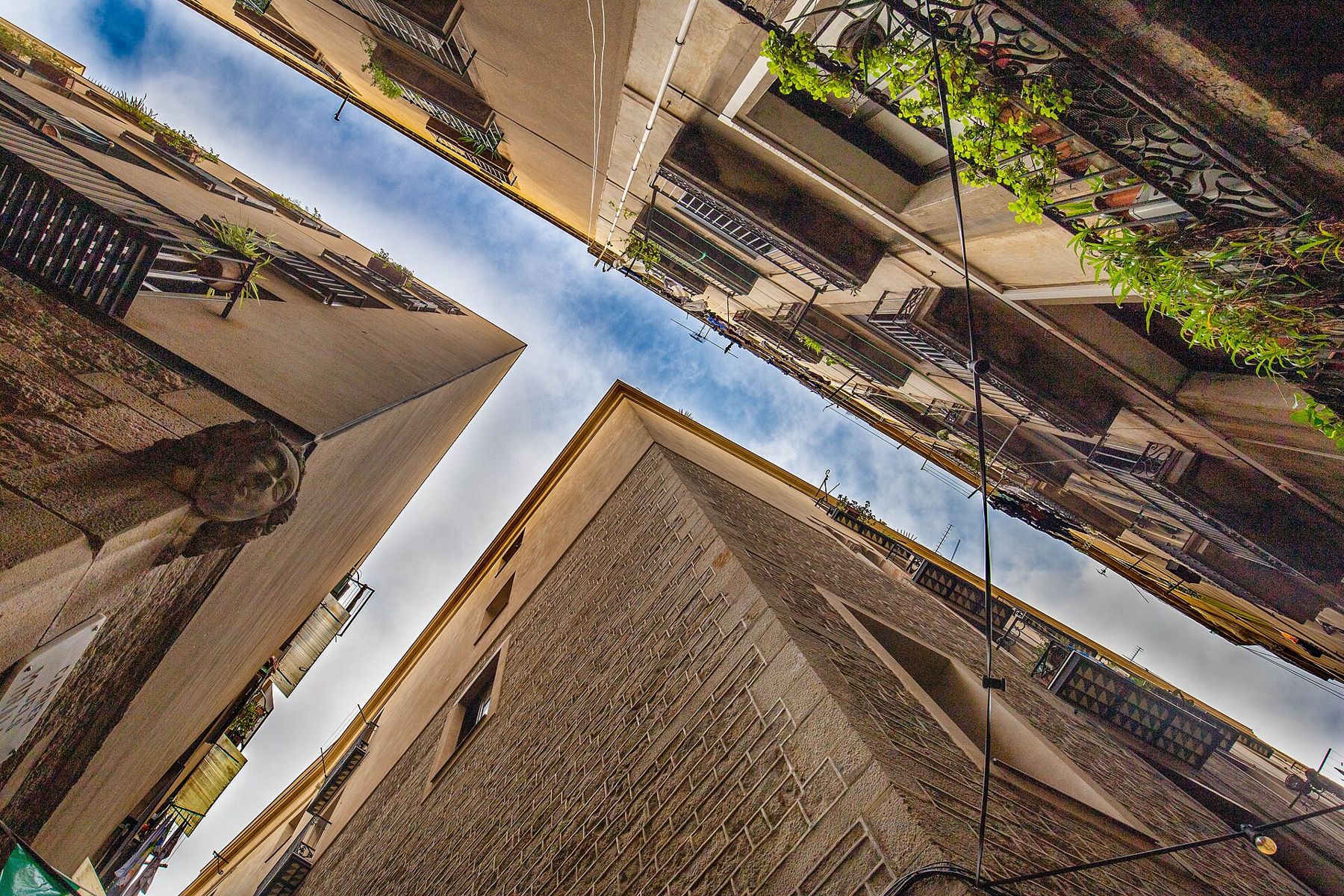
The Barri Gòtic is the oldest part of the city, a tangle of narrow stone lanes around the cathedral, with Roman wall fragments, small squares and the arcaded Plaça Reial. It is bounded on the west by the Rambla, the long promenade that runs down to the port. You can walk to the waterfront, El Born and the bottom of the Eixample in minutes, and metro stations on line L3, such as Liceu, and on line L4 along Via Laietana sit at its edges.
The trade-offs are crowds and noise. The lanes fill with visitors through the day, some squares stay loud late into the night, and rooms in old buildings can be small and dark, often up several flights of stairs. The area around the Rambla is known for pickpockets, so keep bags zipped and phones out of back pockets, as you would in any busy centre. If you choose the Gothic Quarter, ask for a room away from the busiest squares.
El Born: the old town's calmer side
Across Via Laietana, El Born is the eastern part of the old town, with the soaring church of Santa Maria del Mar, the Picasso Museum, small galleries and plenty of places to eat. Its lanes are just as narrow as the Gothic Quarter's but usually feel a little less crowded. The Parc de la Ciutadella is close by, which helps if you want green space for a morning run or a slow afternoon.
El Born is lively in the evening, with bars that keep some streets busy late, especially at weekends. The streets nearest the park and the old market hall are often calmer. It suits couples and repeat visitors who want old-town atmosphere with slightly fewer tour groups. Line L4 runs beneath Via Laietana on its western side, Arc de Triomf on line L1 is close to the north, and the beach at Barceloneta is a walk away.
Eixample: the grid
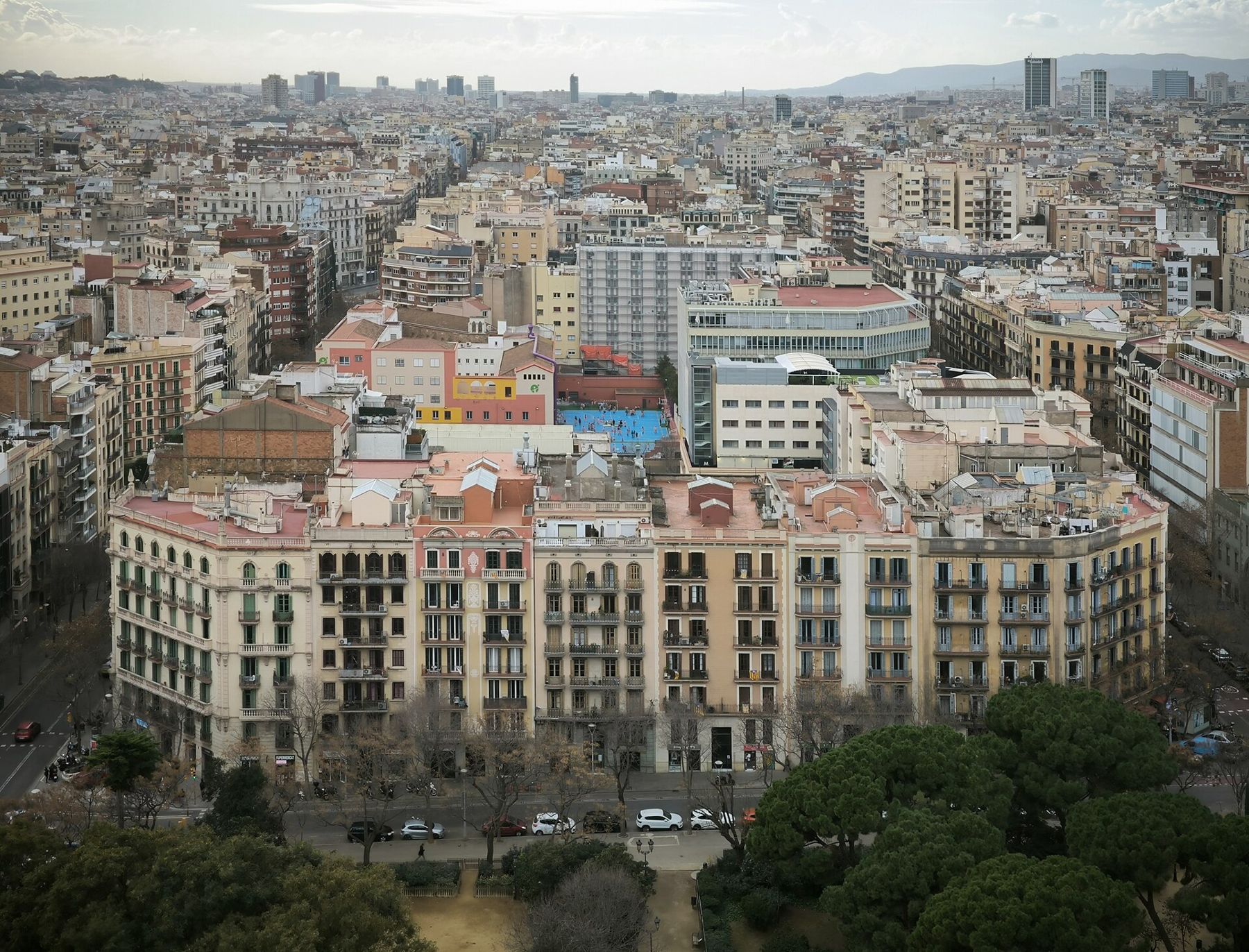
The Eixample is the planned extension laid out in the nineteenth century, a grid of long straight streets and blocks with cut-off corners that make every junction feel like a small square. It holds many of the city's famous modernist buildings, along Passeig de Gràcia and around the Sagrada Família, and most of it is flat.
Change here forChoosing an arrondissement in ParisThe Tagus lineThe Eixample trades medieval atmosphere for space, light and a decent night's sleep.
The Eixample trades medieval atmosphere for space, light and a decent night's sleep.
For a first visit, the Eixample is often the most practical base. Streets are wide, buildings are larger, and rooms tend to be more spacious than in the old town. Passeig de Gràcia station serves lines L2, L3 and L4, and the airport train stops there too. The trade-off is traffic: the big avenues carry a lot of it, so an inner courtyard room is quieter than one on the street. The Eixample is also big. The stretch near Passeig de Gràcia is central and usually costs more, while the blocks further out, towards the Sagrada Família or the western side, are calmer and often better value.
Gràcia: a village inside the city
Gràcia was a separate town until the late nineteenth century, and it still feels like one. Its streets are narrower than the Eixample's, and they open onto a string of small squares where neighbours sit out in the evening. There are fewer big sights, apart from Park Güell on the hill above, and more local life: markets, small shops and corner bars.
It suits travellers who have seen the main sights before, families who want a residential feel, and anyone who likes to eat where people live. Fontana on line L3 and Joanic on line L4 serve it, and the suburban rail station at Gràcia connects with Plaça de Catalunya. Squares can be noisy on warm nights, and during the neighbourhood festival in August the whole district turns into a street party, which is wonderful to see and hard to sleep through.
Poblenou and the beach
Poblenou is a former industrial district north-east of the centre, where old factories have become offices, studios and flats. It has its own tree-lined rambla, wide streets and easy access to the quieter beaches north of the Olympic port. Line L4 runs through it, with stations such as Llacuna and Poblenou.
It is a good choice if the beach matters more than the old town, or if you want more space and calmer nights. Families often like it for the wide pavements, the play areas along its rambla and the short walk to the sand. The trade-off is distance from the historic sights, which means a metro ride for most sightseeing, and some streets feel quiet and spread out in the evening.
Getting in and choosing
From the airport, the airport bus runs to Plaça de Catalunya, the L9 Sud metro line connects with the network, and a suburban train runs to Passeig de Gràcia and Sants. Taxis wait outside the terminals. Check current fares and routes before you go, since airport links change. If you arrive by high-speed train, Sants station is the main hub; it is well connected by metro but sits in a mainly residential and business area west of the centre, so most visitors are happier sleeping a few stops away.
- First visit: the Eixample near Passeig de Gràcia, or the edge of the Gothic Quarter if you want the old lanes.
- Old-town feel, a little calmer: El Born.
- Local life and squares: Gràcia.
- Beach and space: Poblenou.
Rules on short-term holiday flats have been tightening, so check that any apartment you consider is properly licensed. If you are comparing a room by Sants station with one in the old town, the points in near the station or in the old centre will help, and the steps in reading a neighbourhood before you book will tell you how loud a square gets. For another city of hills and old lanes, see where to stay in Lisbon.