Asia Kyoto
Where to stay in Kyoto
Kyoto spreads its temples across a wide valley, so your base decides how much of each day goes on buses. Four areas compared: the station, central Shijo, Gion and Higashiyama, and Arashiyama.
- First time here
- Central Shijo, between Karasuma and the Kamo river: two subway and rail hubs, flat streets, food everywhere, and Gion a short walk east across the bridge.
- From the airport
- Haruka limited express to Kyoto Station
- Best months
- Late October to early December
- Getting there
- Kansai Airport, then the Haruka express
- Pack
- Slip-on shoes for temple floors and a folding umbrella
Kyoto looks compact on a tourist map and turns out not to be. The famous temples sit around the edges of the valley, against the eastern, northern and western hills, while the shops, stations and most places to sleep cluster in the flat grid in the middle. Where you stay decides whether your mornings start with a short walk, a subway ride or a long wait for a crowded bus. Most visitors choose between four areas, and each one solves a different problem.
How the city is laid out
The centre is a grid of streets running north to south and east to west, so it is easy to read once you know a few names. Shijo-dori is the main east-west shopping street; Karasuma-dori and Kawaramachi-dori are the two big north-south avenues; the Kamo river runs down the eastern side of the centre. East of the river, the land rises towards Gion, Yasaka Shrine, Kiyomizu-dera and the lanes of Higashiyama. Kyoto Station sits on the southern edge of the centre, and Arashiyama lies well out to the west.
The subway has only two lines: the Karasuma line, running north to south through the station and the centre, and the Tozai line, running east to west. Private railways fill some gaps, notably the Keihan line along the river and the Hankyu line out of the Shijo area. City buses reach almost everything else, but the routes to the eastern temples fill up badly at busy times of year. A base close to a subway or rail station saves more time here than in most cities.
Around Kyoto Station
The station is the city's front door. Shinkansen trains, the airport express from Kansai, JR lines towards Nara and Osaka, the Kintetsu line and the Karasuma subway all meet here, and the main bus terminal sits outside the north exit. If you plan day trips to Nara, Osaka or Himeji, or arrive late and leave early, the station area is hard to beat for convenience. Fushimi Inari, with its tunnels of red gates, is a short ride south on the JR Nara line.
The trade-off is atmosphere. The streets around the station are wide, modern and busy with traffic, and the old wooden lanes are a ride away rather than outside your door. Evenings are calm but plain. The area suits travellers who see Kyoto as one stop among several, those with heavy luggage, and anyone who values an easy departure over a pretty street. It also tends to have the widest range of room sizes. For a fuller look at this kind of choice, see the guide on whether to stay near the station or in the old centre.
Central Shijo and Kawaramachi
The blocks between Karasuma and the river, roughly from Oike-dori down to Shijo, form the working heart of the city. Two subway lines cross here, the Hankyu line ends at Kawaramachi, and the Keihan line runs under the far bank of the river. Nishiki Market, the covered arcades and the narrow lane of Pontocho are all within a few minutes on foot, and Gion is just over the Shijo bridge.
The ground is flat, the grid is simple, and there is food on every corner at almost any hour, so the area is the easiest base for a first visit. Side streets west of Karasuma are quieter and lined with older townhouses, some converted into small lodgings. The busiest strip, around Kawaramachi and Shijo, is noisy into the evening and very crowded at weekends, so a block or two away from the main crossing usually makes a calmer stay.
Change here forWhere to stay in TokyoThe Han lineGion and Higashiyama
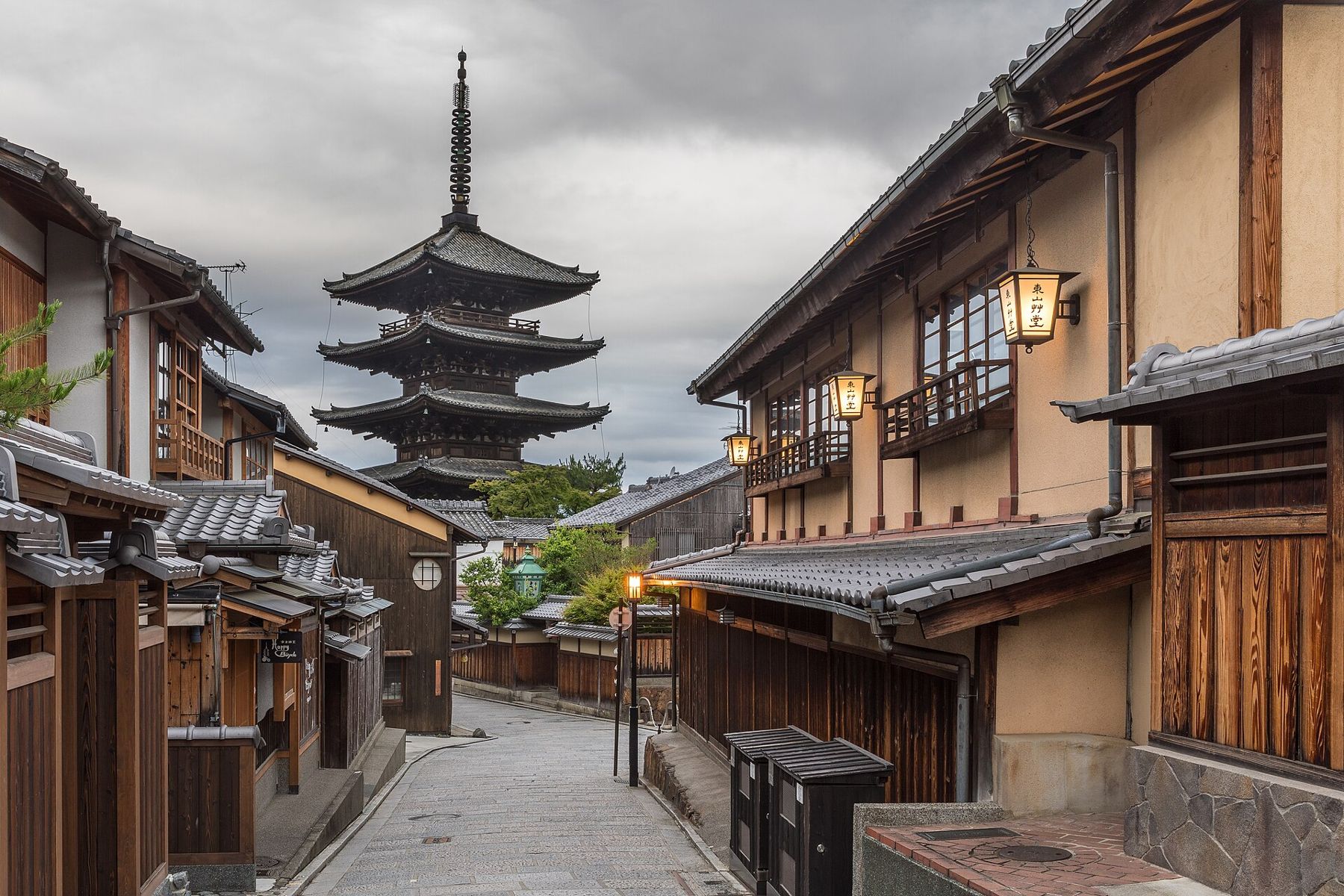
East of the river is the Kyoto most people picture: wooden teahouse facades, stone-paved lanes, the five-storey Yasaka Pagoda rising above the roofs, and the slopes of Ninenzaka and Sannenzaka climbing towards Kiyomizu-dera. Staying here means you can walk these streets early in the morning or after dark, when the day crowds have gone and the lanes feel completely different.
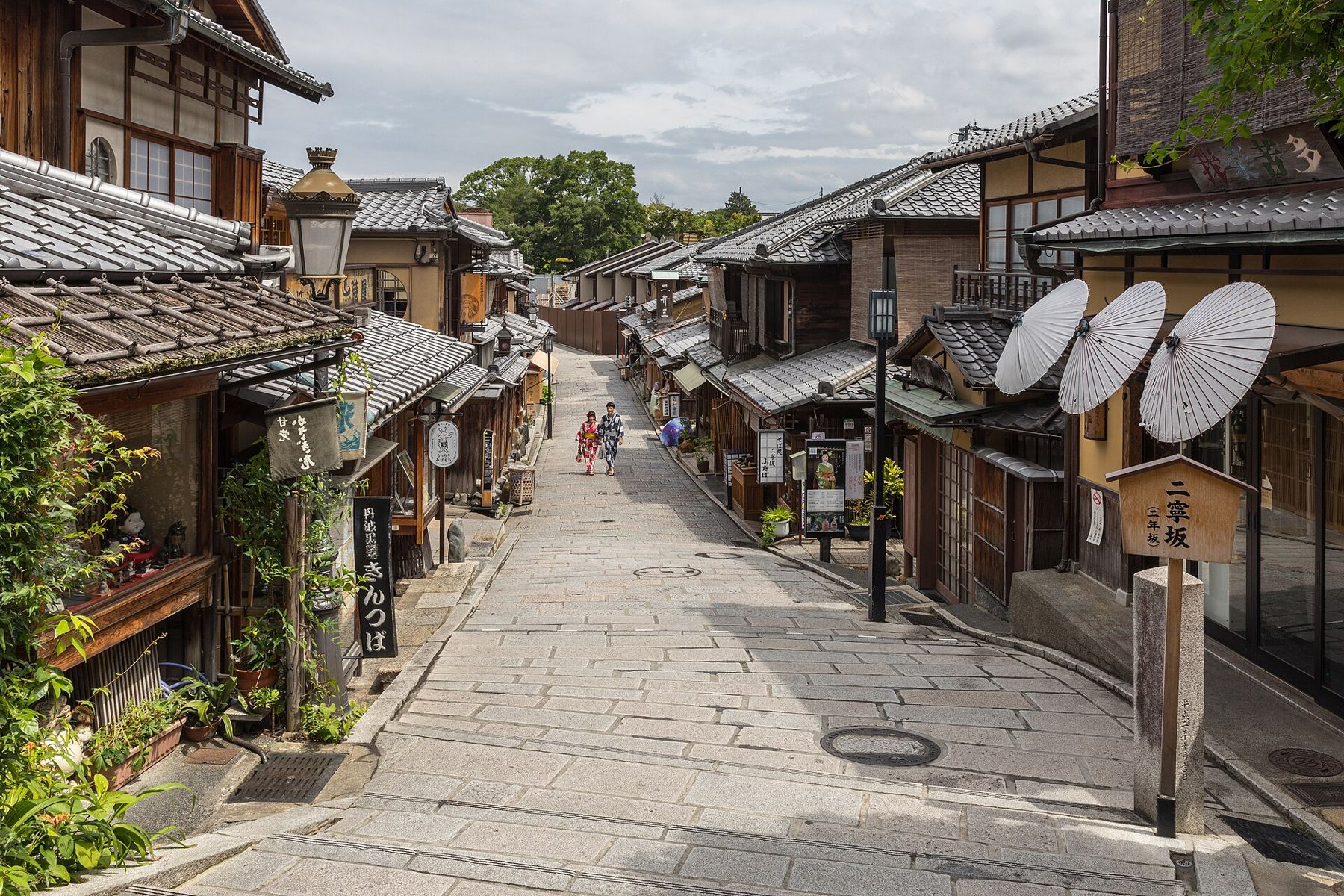
The costs are real, though. Many lanes are steep and some have steps, which matters with a heavy case. Places to sleep are smaller and usually cost more. The subway does not reach most of the district; Higashiyama station on the Tozai line and Gion-Shijo on the Keihan line sit on its edges, and further in you rely on buses or your feet. In the cherry blossom and autumn leaf seasons the main lanes are packed for much of the day. Gion is a living neighbourhood, and residents have asked visitors to keep off private alleys and not to photograph people without asking; signs set out the rules, so read them and follow them.
Arashiyama, out west
Arashiyama sits where the river leaves the western hills, with the Togetsukyo bridge, the bamboo grove, Tenryu-ji and wooded slopes behind. Three rail routes reach it from the centre: the JR Sagano line, the Hankyu Arashiyama branch and the small Randen tram line. During the day it is one of the busiest spots in the city, but most visitors leave by late afternoon, and the evenings are quiet and green.
As a base it works best for a slower stay, a second visit, or a night or two added onto a longer trip. For the eastern temples it is the wrong side of town, with a long ride each way, and evening choices for eating are thinner than in the centre.
Buses, crowds and timing
Whichever area you pick, plan around the buses. They are the only practical link to many temples, and at peak times some routes on the eastern side are too full to board. Trains and the subway are steadier, so look for a base within walking distance of a station, and combine a train ride with a walk where you can. Starting early helps everywhere: the famous sights are calmer in the first hours after opening, and opening times vary by temple and season, so check before you go. The same logic applies in the capital; the guide to where to stay in Tokyo explains how station size and train lines shape the choice there.
Spring blossom and autumn colour bring the largest crowds and the highest demand for rooms, so book well ahead for those weeks. Summer is hot and humid; winter is cold but quieter. If you are unsure about a particular street, the guide on how to read a neighbourhood covers what to check on a map before you commit.
Which one to choose
- First visit, a few nights: central Shijo, for the subway, flat walking and food.
- Day trips and early trains: around Kyoto Station.
- Old lanes at dawn and dusk: Gion and Higashiyama, if stairs and higher costs do not put you off.
- Slow, green evenings: Arashiyama, ideally as part of a longer stay.