The Americas Mexico City
Where to stay in Mexico City
Mexico City is vast, but most visitors sleep in a handful of colonias. How the historic centre, Roma, Condesa, Coyoacán and Polanco compare on walking, transport, noise and evenings.
- First time here
- Roma Norte or Condesa: leafy, walkable streets, plenty of places to eat, and a short ride to both the historic centre and Chapultepec Park.
- From the airport
- Authorised airport taxi or Metrobús Line 4
- Best months
- November to April (dry season)
- Getting there
- Benito Juárez International Airport
- Pack
- Water bottle, sunscreen, light rain jacket for summer afternoons
Mexico City is one of the largest cities in the world, but a visitor's version of it is much smaller. Most of what people come to see sits in a band running from the Zócalo in the east to Chapultepec Park in the west, with Coyoacán off to the south. The city is divided into colonias, and choosing between five of them covers almost every first or second trip. Each comes with its own trade-offs on walking, transport, noise and evenings.
Before you choose: altitude, ground and distance
The city sits at about 2,240 metres. Many visitors feel it for the first day or two, with shortness of breath on stairs, poorer sleep and a quicker effect from alcohol. Take the first days gently and drink plenty of water. The sun is strong at this height, even when the air feels cool.
Much of central Mexico City is built on the soft bed of an old lake, and the region is seismically active. Older and some newer buildings in several central colonias were damaged in the 2017 earthquake. A city-wide alert system sounds sirens when a strong quake is detected; when you arrive, it is worth reading the evacuation notice in your building and knowing the way out. None of this argues for one neighbourhood over another, but it is part of staying here.
Distances are bigger than they look and traffic is heavy at peak times. The Metro is extensive and the Metrobús runs on dedicated lanes along major avenues, including Insurgentes, the long avenue that passes between Roma and Condesa. Ride-hailing and authorised taxis fill in the rest.
Centro Histórico: the monuments on your doorstep
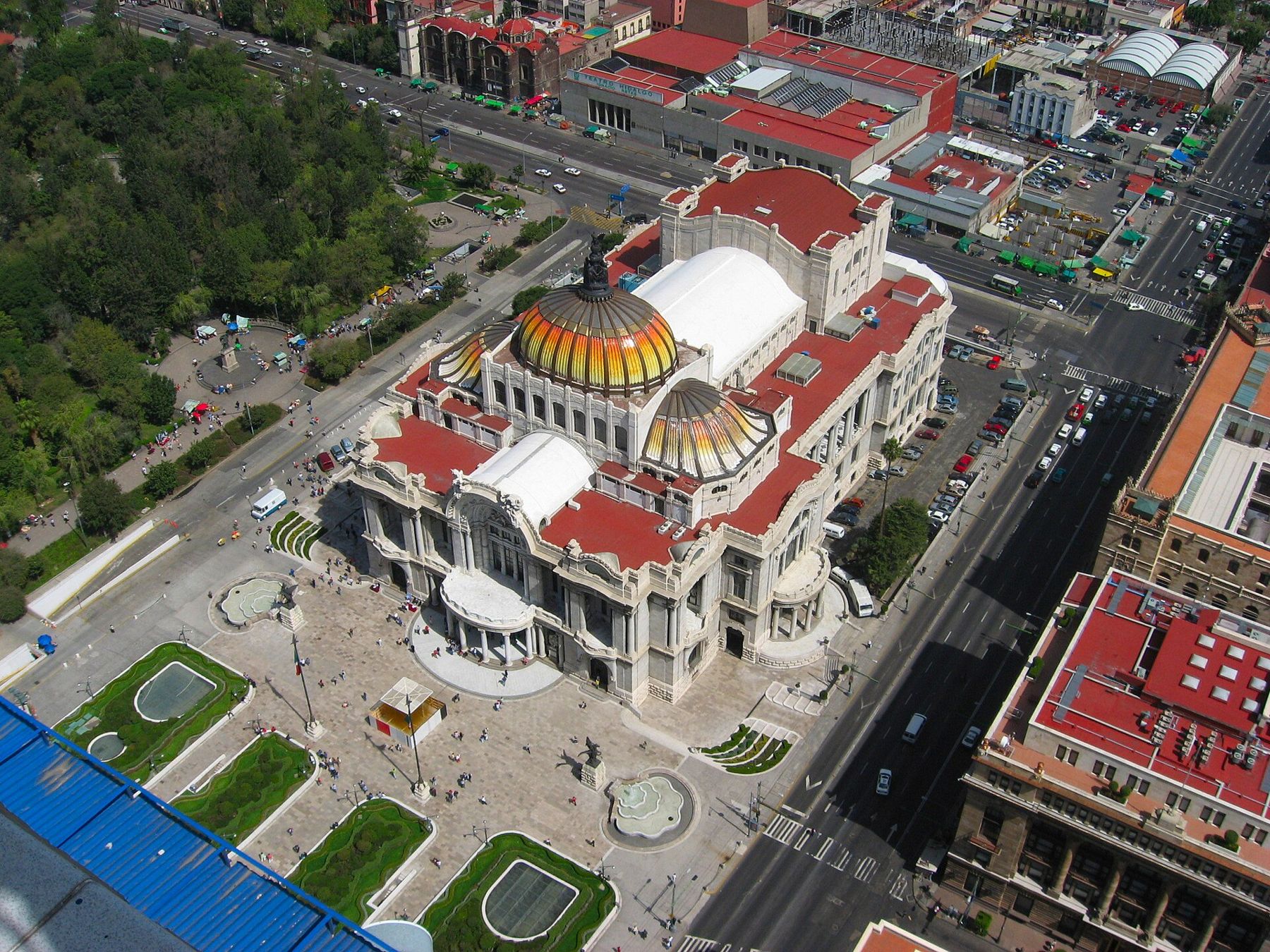
The historic centre holds the Zócalo, the Metropolitan Cathedral, the ruins of the Templo Mayor, the National Palace and dozens of colonial churches and palaces. To the west, the pedestrian street of Madero leads to the Torre Latinoamericana, the Palacio de Bellas Artes and the gardens of the Alameda Central. Several Metro lines meet here, with stations at the Zócalo, Allende and Bellas Artes.
Waking up a few minutes from the cathedral is the main reason to stay. The streets are full of life by day, with markets, street vendors and crowds, especially at weekends. The trade-off comes at night: once shops close, some blocks empty out and feel very different, while others around the main squares stay busy. Choose a street near the Zócalo or along the lit, pedestrian routes, and take a taxi rather than walking long, quiet stretches late. Buildings are often old and grand, rooms can face noisy streets, and the area suits travellers whose priority is museums and architecture.
Roma and Condesa: the leafy middle
Roma: tree-lined streets and old houses
Roma, and especially Roma Norte, is a grid of tree-lined streets with Art Nouveau and early twentieth-century houses, small plazas such as Plaza Río de Janeiro, galleries and a huge range of places to eat and drink. It is walkable, relatively flat and busy with residents as well as visitors. The Metrobús along Insurgentes and Cuauhtémoc and Metro stations on its edges connect it to the centre in a short ride.
Roma is lively into the night, especially on the streets lined with bars, so a quieter side street or an inward-facing room makes a real difference. Popularity has pushed up costs, and some long-time residents have raised concerns about rising rents. Roma Sur, south of the main avenues, is calmer and more residential.
Change here forWhere to stay in Buenos AiresThe Hudson lineCondesa: parks and a slower pace
Condesa sits just west of Roma across Insurgentes. Its centrepieces are Parque México and Parque España, both full of trees, dog walkers and runners, and the oval of Avenida Amsterdam, a shaded loop with a tree-lined walkway down its middle that follows the line of an old racetrack. Many buildings are Art Deco, and the streets are leafy and largely flat.
Condesa feels a little calmer and greener than Roma, with a similar range of food, and it is within walking distance of Chapultepec Park and its museums. The two blend into each other, so many visitors stay on the border and use both. Evenings can be busy at weekends along the main streets. Like Roma, Condesa usually costs more than the historic centre, and the nearest Metro stations sit on its edges rather than in the middle, so most journeys start with a walk or the Metrobús.
Coyoacán: a town within the city
Coyoacán, to the south, was a separate town before the city grew around it. Its cobbled streets, colonial houses and twin plazas, the Jardín Centenario and Plaza Hidalgo, feel calmer and more provincial than the centre. The Frida Kahlo Museum is here, and there are good markets and the large tree nursery park of Viveros de Coyoacán.
The catch is distance. Coyoacán is a long ride from the historic centre and from Roma and Condesa; Metro Line 3 serves stations on its edges, but the walk from them to the plazas is not short. It suits a slower stay, a second visit, or travellers who want quiet evenings and do not mind spending more time on the move. Weekends bring crowds of day visitors to the plazas.
Polanco: polished and close to the museums
Polanco, north of Chapultepec Park, is the city's most upscale residential and shopping district, with designer stores along Avenida Presidente Masaryk, embassies and smart restaurants. The National Museum of Anthropology is a short walk away across Paseo de la Reforma, and the rest of Chapultepec Park lies beyond. Metro Line 7 has a station in the area.
The streets are clean, well kept and generally considered among the city's safer areas. The trade-off is atmosphere: Polanco feels more international than local, evenings revolve around restaurants rather than street life, and it usually costs more. It suits business travellers, families wanting calm, and anyone who wants comfort over character. For a similar pattern in another big city, see the comparison of areas in where to stay in New York City.
Arriving and getting around
The main airport is Benito Juárez International, close to the city on the east side. Authorised taxis are booked at official counters inside the terminals; Metrobús Line 4 links the terminals with the historic centre, and a Metro station sits near Terminal 1. If you are carrying heavy bags at night, the taxi is usually simplest. Check current arrangements before you go.
Safety advice is the same across all five areas: keep phones out of sight on crowded Metro carriages and at busy crossings, use official taxis or a ride-hailing app at night, and ask locally if a particular street feels quiet. If you are weighing two streets in the same colonia, the guide on reading a neighbourhood before you book explains what to look for. Earthquake alarms, altitude and long distances aside, Mexico City is easy to enjoy once you pick the right base for the trip you have in mind.
The city is divided into colonias, and choosing between five of them covers almost every first or second trip.