Africa and the Middle East Marrakech
Medina or Gueliz: where to stay in Marrakech
Marrakech splits into the walled medina and the newer city outside it. How the old lanes, Gueliz and Hivernage compare on noise, heat, taxis, luggage and what you find outside your door at night.
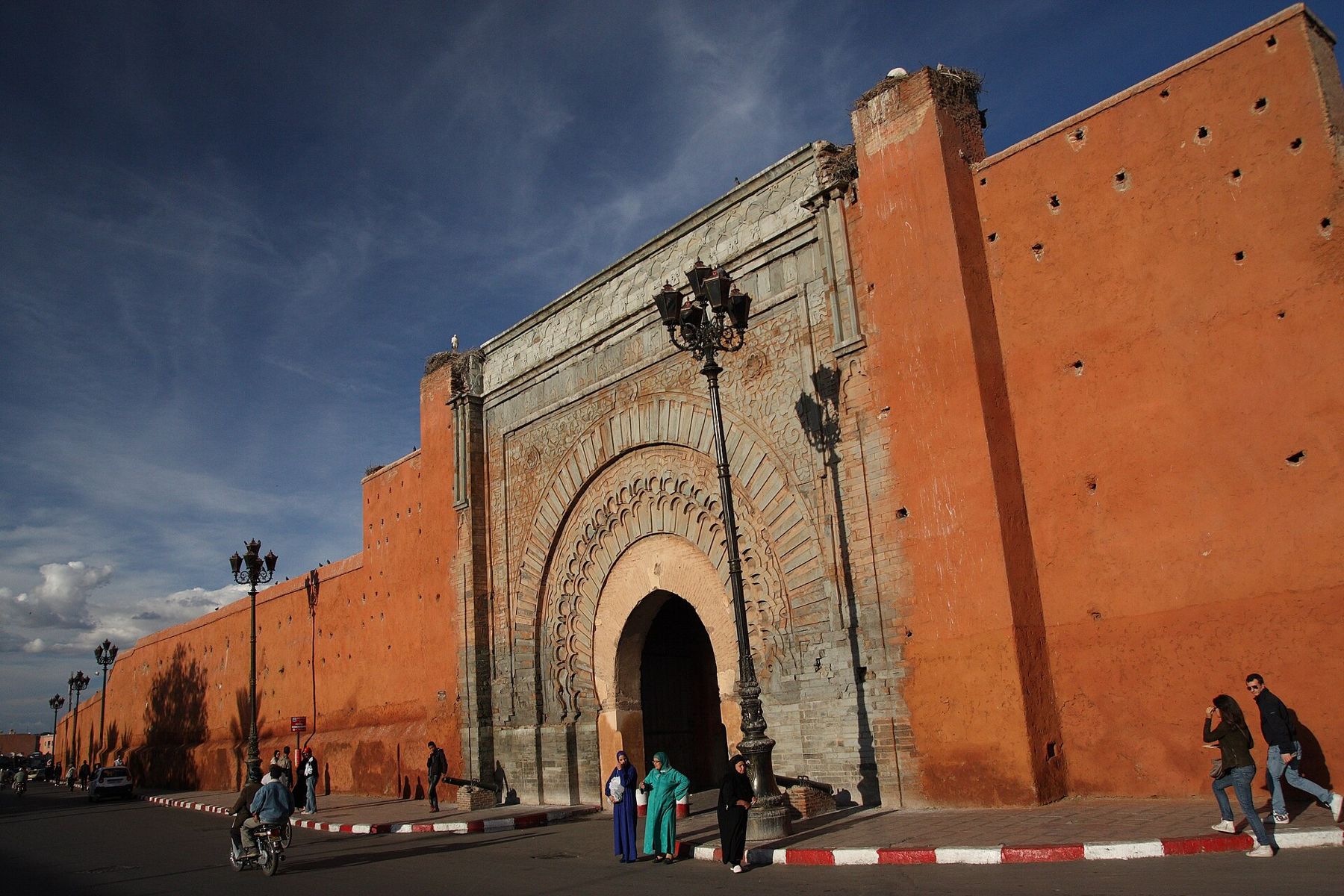
- First time here
- Inside the medina, within a short walk of Jemaa el-Fnaa: the souks, palaces and evening square are on foot, and a courtyard house shuts out the noise.
- From the airport
- Petit taxi or airport bus to the medina
- Best months
- March to May, October, November
- Getting there
- Marrakech Menara Airport, then taxi
- Pack
- Closed shoes, a sun hat and a warm layer
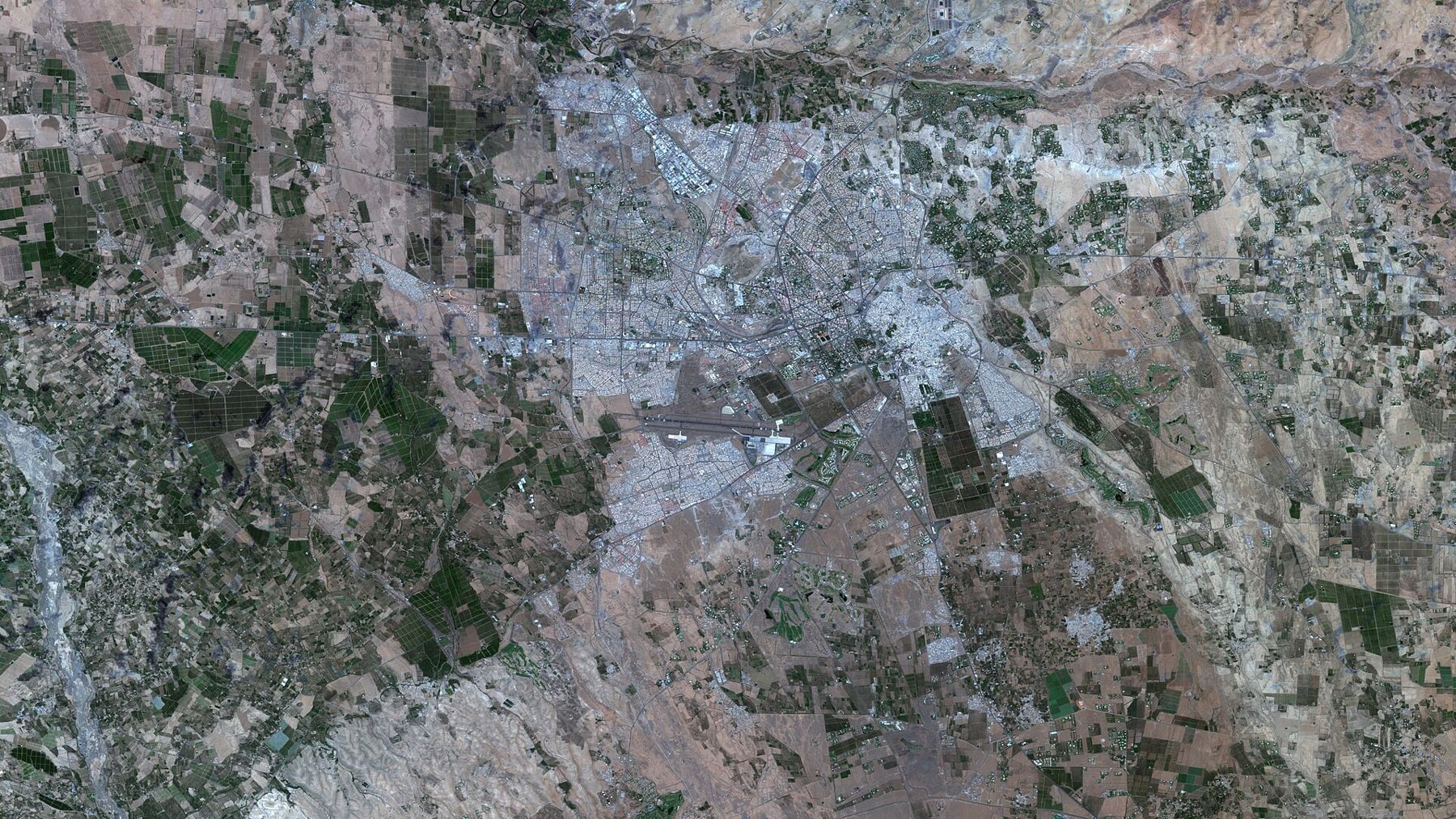
Marrakech is two cities side by side. The medina, the old walled city, is a maze of lanes, souks, mosques and courtyard houses around the great square of Jemaa el-Fnaa. Outside its gates lies the newer city, laid out in the twentieth century with wide avenues, cafes and apartment blocks, with Gueliz as its centre and Hivernage between Gueliz and the walls. Where you stay changes almost everything about a visit: how you get around, what you hear at night and how far you carry your bags.
Inside the medina: the old city on your doorstep
Most first-time visitors stay inside the walls, and for good reason. The souks, the Koutoubia Mosque, the Ben Youssef Madrasa, the Bahia Palace and Jemaa el-Fnaa are all on foot, and the square itself is the centre of the city's evening life, filling with food stalls, music and storytellers as the light fades. Places to stay here are usually riads, traditional houses built around an inner courtyard, often with a roof terrace.
That inward-facing design is the medina's great advantage. Thick walls and a courtyard mean that once the door closes, the noise of the lanes mostly disappears. What you will still hear is the call to prayer from nearby mosques, which starts before dawn, and sometimes the sound of mopeds, which are allowed in many lanes. Light sleepers should bring earplugs.
The trade-offs are practical. Cars cannot reach most riads, so taxis stop at the nearest gate or square and the last stretch is on foot, often with a porter and a handcart for bags. The lanes are hard to navigate at first, and maps on a phone are not always reliable in the narrowest alleys. Some areas are much busier than others: the lanes right around the square and the main souk streets are crowded and loud by day, while districts such as Mouassine, Bab Doukkala or the quieter edges of the medina feel calmer and more residential.
Visitors in the medina often meet self-appointed guides who offer to show the way, or are told a street is closed. A polite but firm refusal usually ends it. Women travelling alone may get unwanted comments; it is generally a nuisance rather than a danger, but it is worth knowing. Dress modestly in the old city out of respect for residents.
Kasbah and the Mellah: the quieter south
The southern part of the medina, around the Kasbah and the old Jewish quarter of the Mellah, is a slightly different world. The Saadian Tombs and the ruins of the El Badi Palace sit here, the Bahia Palace is close by, and the streets are a little wider and calmer than the souk lanes to the north. Taxis can often get closer to the door, which helps with luggage.
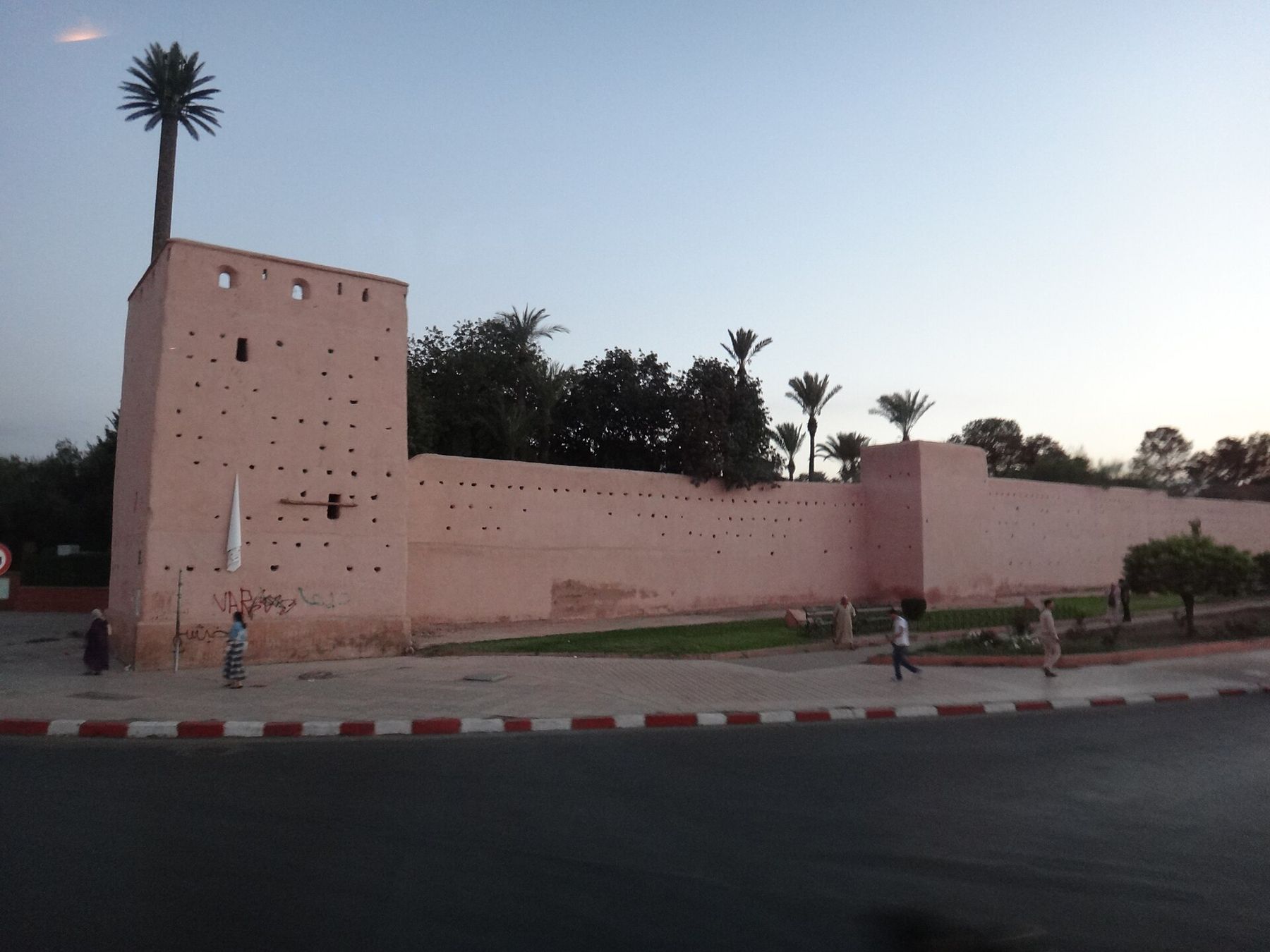
The walk to Jemaa el-Fnaa is still short, so you keep most of the medina's advantages with less of the crowding. Evening choices for eating are thinner than around the square, and some streets are very quiet after dark. It suits travellers on a second visit, those who want to sleep well, and anyone who would rather dip into the busiest parts than live in them.
Change here forWhere to stay in Cape TownThe Atlas lineGueliz: the modern centre
Gueliz, north-west of the medina along Avenue Mohammed V, was built as the new town in the early twentieth century. It has broad pavements, apartment blocks, galleries, cafes and restaurants serving the city's residents as well as visitors, and the Majorelle Garden lies a short way to the north-east. The railway station, with trains north towards Casablanca and Rabat, sits on its southern side.
Staying here feels like being in an ordinary modern city. Streets are easy to navigate, taxis drive to the door, luggage is simple, and evenings are relaxed, with a mix of local and international places to eat. Many rooms are in conventional buildings with lifts, and there is more choice of apartments. The trade-off is distance: the medina is a long walk or a short taxi ride away, so every visit to the souks starts with a ride. For travellers who find the medina tiring, or who want calm evenings after busy days, Gueliz is a sensible choice.
Hivernage: resorts and gardens
Hivernage sits between Gueliz and the medina walls, a district of large, low-rise hotels, gardens, a conference centre and some of the city's late-night venues, with the Menara Gardens and their large reflecting pool to the south-west. Streets are wide, green and quiet by day, and it is close to the airport.
It is the most resort-like part of the city. Visitors who want a pool, space and a car to the door will find it easy; those who want street life outside will not. The medina walls are close, and parts of Hivernage are within walking distance of the Koutoubia, though the walk runs along busy roads. It usually costs more. Further out, the Palmeraie, a palm grove north of the city, has resort-style properties on large plots; it is quiet, but you rely completely on taxis or drivers.
Heat, taxis and arriving
Summer in Marrakech is very hot, with afternoons that can be far above what most visitors are used to; the medina's narrow lanes give some shade, but plan walks for mornings and evenings. Spring and autumn are the most comfortable seasons. Winter days are often mild and sunny, but nights can be cold, and older houses can feel chilly, so a warm layer is worth packing.
Marrakech Menara Airport is close to the city on the south-west side. Petit taxis wait outside, and an airport bus line serves the centre; fares and routes change, so check before you go, and agree on the fare or the meter before you set off in any taxi. If you are staying in a riad, ask in advance where the taxi will stop and whether someone can meet you there. For the comparison of a historic core with a newer district elsewhere, see the guide on whether to stay near the station or in the old centre.
Within the city, petit taxis are the main way between the medina, Gueliz and Hivernage. Inside the medina, you walk. A base close to one of the main gates or squares gives you the best of both: lanes on one side, a taxi rank on the other.
Which base suits you
- First visit, full immersion: a riad inside the medina, near enough to Jemaa el-Fnaa to walk back easily at night.
- Quieter medina with easier access: the Kasbah and Mellah.
- Calm evenings, easy taxis and luggage: Gueliz.
- Pool and space: Hivernage, or the Palmeraie further out.
Where you stay changes almost everything about a visit: how you get around, what you hear at night and how far you carry your bags.
If you are unsure about a particular lane or district, the guide on how to read a neighbourhood covers what to check before you book. Many of the same questions, about old walls, steep lanes and luggage on cobbles, come up in the guide to where to stay in Lisbon.