Asia Tokyo
Where to stay in Tokyo
Tokyo is a city of stations, not one centre. Here is how Shinjuku, Shibuya, Asakusa, Ginza and Ueno compare for train lines, crowds, quiet streets and getting to the airports.
- First time here
- Shinjuku, on the west side near the station: many train lines, late food, easy day trips, and a short ride to almost every other quarter.
- From the airport
- Airport train, then change to your line
- Best months
- Spring and late autumn
- Getting there
- Fly into Haneda or Narita
- Pack
- A rechargeable transit card and comfortable walking shoes
Tokyo has no single centre. It is a cluster of districts, each built around a big railway station, and most visitors spend their days riding between them. That makes the most useful question not "how central is it" but "which lines run from my nearest station, and how big is that station".
The JR Yamanote line runs in a loop around central Tokyo, linking Shinjuku, Shibuya, Ueno, Tokyo Station and many others. Subway lines cross the loop in every direction. A room a few minutes' walk from a station on the loop, or on a subway line that runs to the places you care about, is the goal. Here is how five quarters compare.
Shinjuku: the busy hub
Shinjuku is one of the busiest stations in the world, served by several JR lines, private railways and subway lines. Around it are department stores, electronics shops, a great deal of food at every price, and the nightlife district of Kabukichō on the east side. To the west stand office towers and the metropolitan government buildings, and to the south-east lies the large Shinjuku Gyoen garden.
Shinjuku is practical: trains run from here to the mountains and hot springs west of the city, and you can reach most of Tokyo without a change. The trade-off is the station itself, which is huge and confusing on a first visit, with many exits. Ask which exit is nearest your room, and expect crowds at rush hour. The west side is calmer at night than the area around Kabukichō.
Shinjuku is less a neighbourhood than a small city that never quite switches off.
Shinjuku is less a neighbourhood than a small city that never quite switches off.
Shibuya: young and loud
Shibuya is famous for its scramble crossing, where crowds pour across from every direction when the lights change, and for the statue of the loyal dog Hachikō beside the station. The area is full of shops, cafés and nightlife, and has been heavily redeveloped in recent years with new towers above the station.
It is on the Yamanote line and several subway and private lines, so it is well connected, though slightly less so for the eastern sights such as Asakusa and Ueno. Shibuya suits younger travellers and anyone who wants energy late into the night. Quieter residential streets lie a short walk away, towards Daikanyama and Ebisu, if you want calm nights with Shibuya on the doorstep.
Change here forWhere to stay in SeoulThe Han lineAsakusa and Ueno: older Tokyo
Asakusa, in the north-east, is built around the Buddhist temple of Sensō-ji, approached through a great gate and a long street of stalls. Its lanes are lower and older than the towers of the west, and evenings are much quieter once the day visitors leave. The Sumida River runs along its eastern edge, with the Tokyo Skytree across the water.
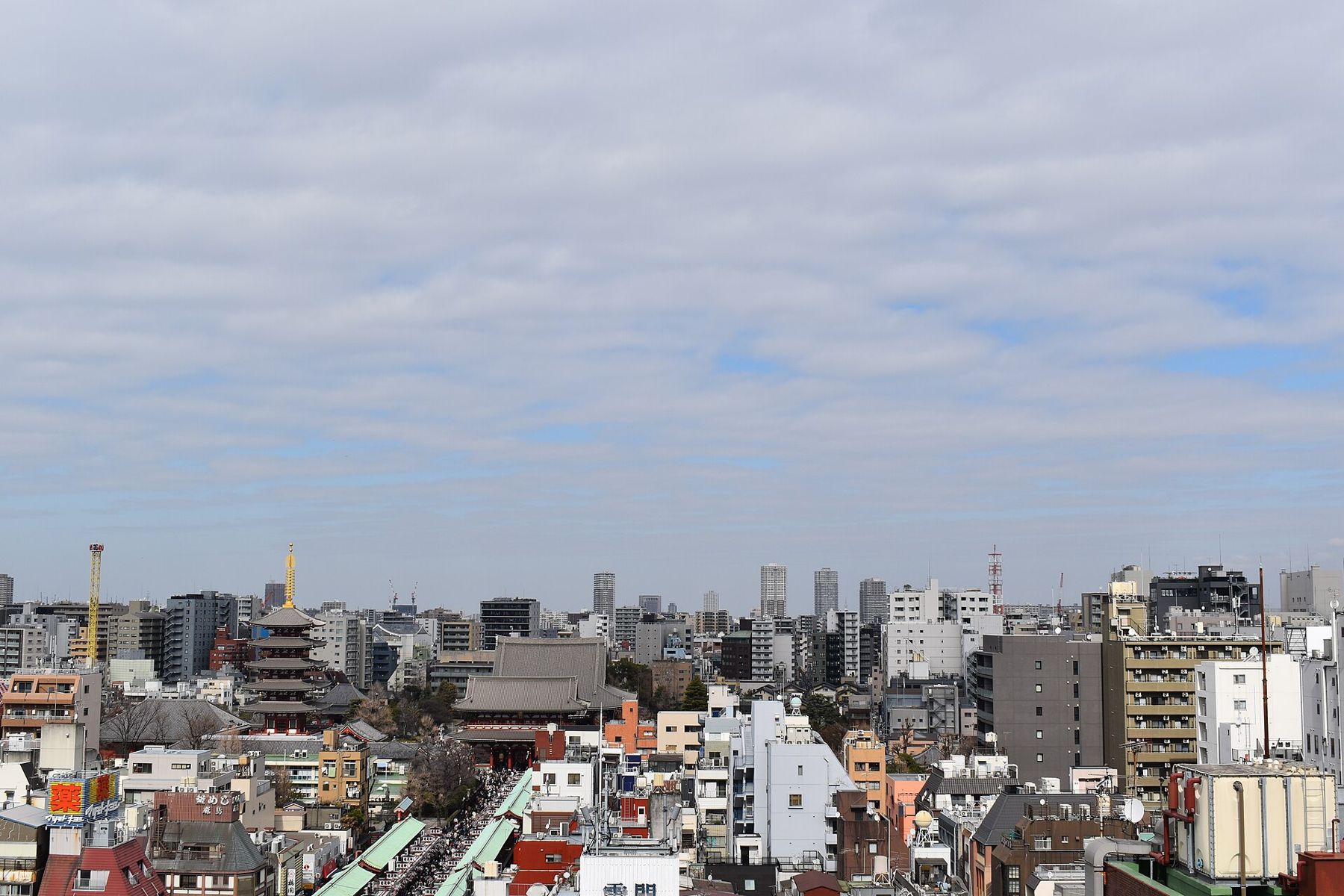
Asakusa is served by the Ginza subway line and the Toei Asakusa line, which has through trains towards both airports. The trade-off is distance: Shinjuku and Shibuya are a longer ride, often with a change. Rooms here usually cost less than in the west.
Ueno, a little to the west, has Ueno Park with several major museums and a zoo, the busy Ameyoko market street and a big station on the Yamanote line. The Keisei Skyliner from Narita airport arrives nearby, which makes Ueno convenient for that airport. Streets around the station are busy and a little rough-edged at night, while the area around the park is calmer.
Ginza and around Tokyo Station
Ginza is the polished shopping district of department stores and flagship shops, with wide pavements and quiet side streets. It is close to Tokyo Station, where the shinkansen high-speed trains leave for Kyoto, Osaka and beyond, and several subway lines meet beneath it. The Imperial Palace gardens lie a short walk to the west.
Ginza is calm at night and feels safe and orderly, though in general Tokyo is one of the safer big cities for visitors. The trade-off is cost, since rooms here usually cost more, and a quieter evening scene than Shinjuku or Shibuya. It is a strong choice if you plan day trips by shinkansen or a trip to Kyoto.
Station size and quiet streets
The biggest stations, such as Shinjuku, Shibuya and Tokyo Station, have many exits and long underground passages, and finding the right one with luggage can take a while. A room near a smaller station one or two stops away can be easier to reach and calmer at night, while still being a short ride from the action. Tokyo's residential streets are often surprisingly quiet only a few minutes' walk from a busy station, so look at the street itself, not just the district name.
Rooms in Tokyo are often compact, especially in central areas, so check the floor area if you travel with large suitcases. Coin lockers and luggage delivery services at major stations help on travel days. Trains stop running for a few hours around midnight, so if you plan late evenings, staying near where you will spend them saves a long taxi ride.
Getting in and choosing
From Haneda airport, rail lines and a monorail run into the city, connecting with the Yamanote line and the subway. From Narita, which is much further out, express trains run to Tokyo Station, Shinjuku and Ueno, and airport buses serve many districts. Check routes, journey times and fares before you travel, and ask which exit of your station is closest to your room.
- First visit, lots of day trips: Shinjuku.
- Nightlife and energy: Shibuya.
- Older streets, quieter nights: Asakusa.
- Shinkansen and shopping: Ginza or near Tokyo Station.
- Narita arrivals and museums: Ueno.
For how to judge a street from a map before you commit, see how to read a neighbourhood, and for the trade-offs of sleeping next to a giant station, read near the station or in the old centre.