Africa and the Middle East Cape Town
Where to stay in Cape Town
Table Mountain splits Cape Town into a city side and an ocean side. How the City Bowl, Gardens, Bo-Kaap, Sea Point and Camps Bay compare on wind, beaches, walking and getting around.
- First time here
- Gardens or the upper City Bowl: central, close to restaurants on Kloof and Bree streets, and a short drive to both the mountain cableway and the Atlantic coast.
- From the airport
- MyCiTi airport bus or a pre-booked car
- Best months
- February, March, April
- Getting there
- Cape Town International Airport
- Pack
- A windproof jacket, sunscreen and swimwear for cold water
Cape Town is shaped by its mountain. Table Mountain and its neighbours, Lion's Head and Devil's Peak, wrap around the city centre in a natural bowl, while the Atlantic suburbs line the coast on the far side. That geography decides almost everything about where to stay: how much wind you get, whether you see the sea or the mountain, and how easy it is to walk to dinner. Five areas cover most visits.
How the city fits together
The City Bowl is the centre, sloping up from the harbour towards the mountain. Gardens and Tamboerskloof sit on its upper slopes; the Bo-Kaap climbs the side of Signal Hill on its western edge. Over the shoulder of Signal Hill lie Green Point and Sea Point along the Atlantic, and further south, below the cliffs of the Twelve Apostles, is Camps Bay. The V&A Waterfront sits on the harbour between the centre and Green Point.
The MyCiTi bus network links the airport, the centre, the Waterfront and the Atlantic coast, and is the main public option for visitors. Most visitors also rely on ride-hailing or taxis, especially at night. A car is useful for day trips to the Cape Peninsula and the winelands, but parking in the centre takes patience.
City Bowl and Gardens: the central choice
The central streets of the City Bowl hold the Company's Garden, museums, markets and a growing number of restaurants and bars, especially along Bree Street. Gardens and Tamboerskloof, higher up, are leafier and more residential, with Kloof Street as their main strip of cafes and restaurants. The lower cable station on Table Mountain is a short drive away.
This is the best all-round base for a first visit. You are central for the Waterfront, the Atlantic coast and the mountain, and many restaurants are within walking distance. The lower City Bowl is busy by day and quieter at night once offices close; the upper streets are calmer but steep. Some properties look straight up at the mountain, which is a real pleasure in the morning light.
Bo-Kaap: colour and history
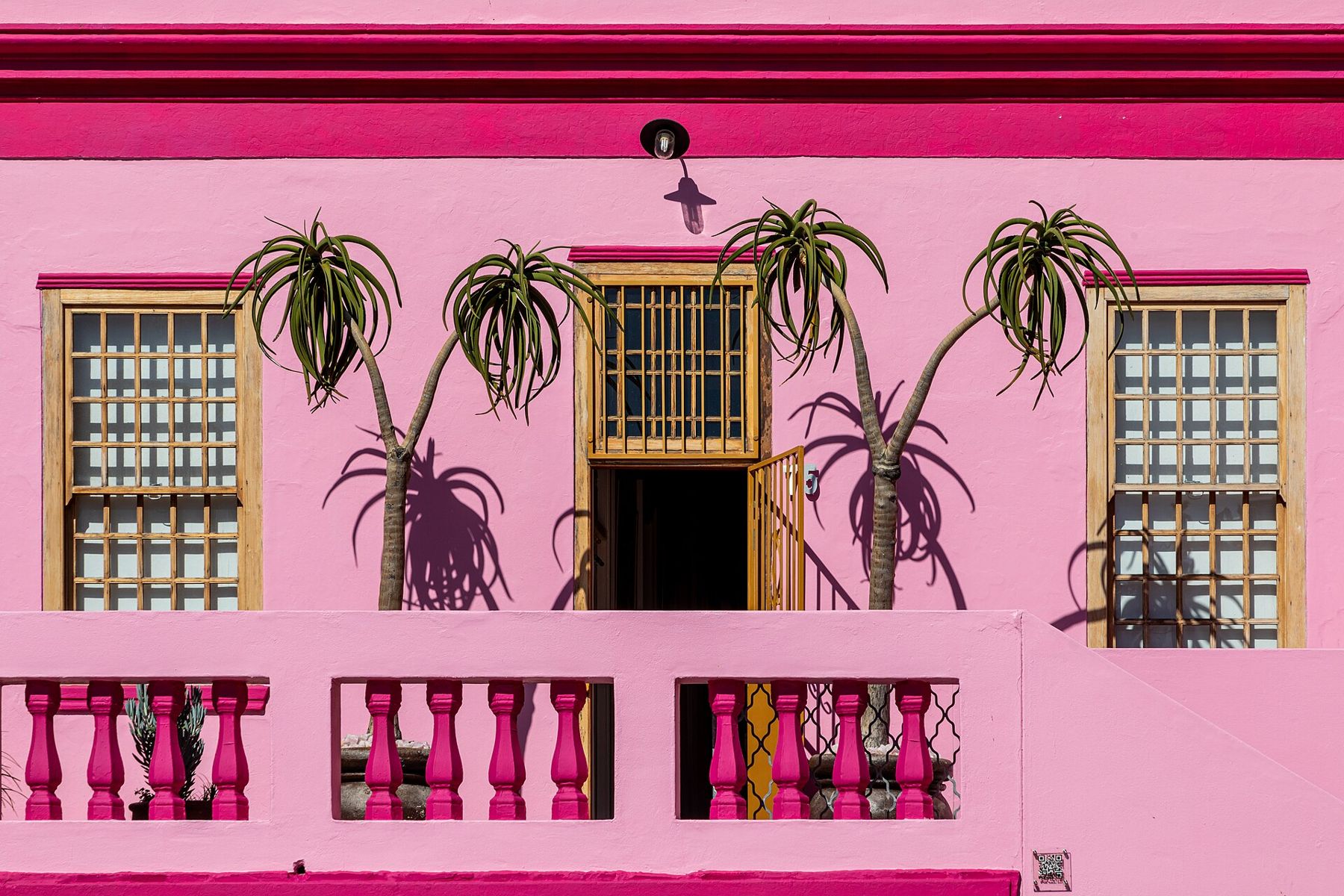
The Bo-Kaap, on the slopes of Signal Hill, is known for its brightly painted houses and cobbled streets. It is one of the oldest residential areas in the city, historically home to a Muslim community descended in large part from people brought to the Cape as slaves and political exiles. Its mosques, including one of the oldest in the country, and the Bo-Kaap Museum tell that story.
It is a short walk downhill to the city centre and Bree Street, and the views over the city are wide. It is also a living neighbourhood under pressure from rising property values, and residents have long asked visitors to be respectful: do not block doorways or photograph people without asking, keep noise down, and dress modestly near mosques. Streets are steep, and evenings are quiet.
Change here forMedina or Gueliz: where to stay in MarrakechThe Atlas lineSea Point and Green Point: the promenade side
Sea Point and Green Point face the Atlantic, with a long seafront promenade popular with walkers, runners and cyclists, and Green Point Park and the stadium nearby. Sea Point has a busy main road lined with places to eat, plus apartment blocks with ocean views. The Waterfront is a short ride away, and MyCiTi buses run along the coast towards the centre and Camps Bay.
This area suits travellers who want sea air, sunsets and a daily walk by the water without being far from the centre. The main road is busy and can be noisy, so a side street or a higher floor helps. The promenade looks onto rocky shores and tidal pools rather than wide sand, though small beaches do appear along the coast.
Camps Bay: beach and mountain views
Camps Bay is the city's best-known beach suburb, with a wide arc of white sand, palm trees and the Twelve Apostles rising behind. It is lively on summer days and evenings, with a strip of restaurants and bars facing the beach. Properties climb the hillside, many with sea views.
The water is cold year-round, which surprises many visitors. Camps Bay usually costs more, is further from the centre, and depends on buses, taxis or a car to get anywhere else. Some streets are steep. It is a good base for a beach-focused trip, less so for one that is mostly about the city or day trips inland.
Wind, weather and staying safe
Cape Town has dry summers and wet winters. The strong south-easterly wind, often called the Cape Doctor, blows often in summer, and it can make some exposed spots uncomfortable. Different parts of the city catch it differently, and the Atlantic side is sometimes calmer. Wind and cloud also close the Table Mountain cableway at short notice, so keep plans flexible and check on the day. Late summer and early autumn bring warm days with often less wind than midsummer.
Power cuts have affected South Africa in recent years; ask whether a place has backup power if that matters to you. On safety, the usual guidance applies across all these areas: keep valuables out of sight, use ride-hailing or registered taxis at night rather than walking long distances, and do not hike alone on the mountain. Ask locally about specific routes. The guide on how to read a neighbourhood covers what to check before booking a particular street.
Which area to choose
- First visit: Gardens or the upper City Bowl.
- History and city views: the Bo-Kaap, with respect for residents.
- Seafront walks and easy access: Sea Point or Green Point.
- Beach days: Camps Bay.
For another city where a base by the sea competes with one in the old centre, see the guide to where to stay in Barcelona.